Physical Properties:
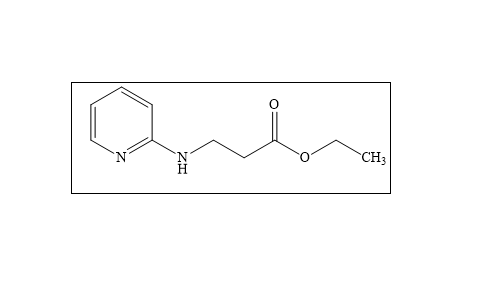
Ethyl 3-(2-Pyridylamino)propionate (CAS 103041-38-9) is a white to orange/greenish solid powder with a molecular formula of 𝐶10𝐻14𝑁2𝑂 and a molecular weight of 194.23 g/mol. It acts as a pharmaceutical intermediate with a typical melting point of 48–55°C and purity generally ≥97% or 98%. It should be stored in a cool, dark place, often under an inert atmosphere.
Key Properties and Specifications
CAS Number: 103041-38-9
Molecular Formula: 𝐶10𝐻14𝑁2𝑂2
Molecular Weight: 194.23 g/mol
Appearance: White to orange to green powder or solid
Melting Point: 48–55°C
Boiling Point: 337.8±22.0 °C at 760 mmHg (predicted)
Density: 1.1±0.1 g/cm³
Purity (GC/Titration): ≥96%–99%
Refractive Index: 1.545
Storage: 2–8°C recommended (refrigerated)
Common Synonyms for 103041-38-9:
Ethyl 3-(pyridin-2-ylamino)propanoate
3-(2-Pyridylamino)propionic acid ethyl ester
N-(2-Pyridyl)-β-alanine ethyl ester
N-2-Pyridinyl-β-alanine ethyl ester
Ethyl 3-(2-pyridylamino)propanoate
Dabigatran etexilate intermediate 4 / Impurity 90
N-Pyridyl-β-alanin-ethyl ester
Safety and Handling
The compound should be handled with standard precautions, including protective gloves and safety goggles. It is often used in research and development and as a drug intermediate.
Ethyl 3-(2-pyridylamino)propionate (CAS 103041-38-9) is a white solid primarily used as a key pharmaceutical intermediate in the synthesis of Dabigatran etexilate, an anticoagulant medication. It serves as a building block for benzimidazole drugs and acts as an analytical reference standard for quality control, often appearing as impurities in pharmaceutical production.
Key applications and details:
- Pharmaceutical Intermediate: It is critical in producing Dabigatran etexilate, a direct thrombin inhibitor.
- Analytical Standard: It is utilized as a reference standard in pharmacological studies, including in HPLC analysis for impurity profiling.
- Chemical Properties: It is also known as N-2-Pyridinyl-𝛽-alanine ethyl ester, with a formula of
𝐶10𝐻14𝑁2𝑂2 and typically exists as a white solid.
- Synthesis: It is produced by reacting 2-aminopyridine and ethyl acrylate.
It is widely used in pharmaceutical R&D for synthesizing heterocycles.