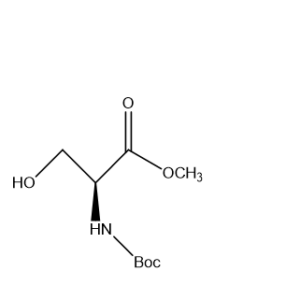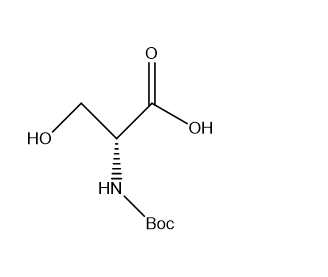
Uses:
- Peptide Synthesis:Boc-D-Serine CASNO:6368-20-3, It is widely used in both solid-phase and solution-phase peptide synthesis. The “Boc” group acts as a protective shield for the amino group, preventing unwanted side reactions while other parts of a peptide chain are being built.
- Pharmaceutical Development: It is an essential intermediate for creating peptidomimetics(molecules that mimic natural peptides) and drug candidates. For example, it is used to synthesize Lacosamide derivatives, which are potent anticonvulsants.
- Biomedical Research:
Neuroscience: Researchers study it for its role in modulating NMDA receptors, which are critical for memory and learning.
Enzyme Inhibitors: It is used to design inhibitors for various enzymes, such as cysteine proteases.
Bioconjugation: It helps link biomolecules for drug delivery systems or diagnostic tools.
Chirality Studies: Because it is a specific chiral form (the “D” isomer), it is used to explore how the spatial arrangement of molecules affects biological systems.
Key Applications:
- Peptide Synthesis:Acts as a protected amino acid derivative (Boc-D-Ser-OH) in both solid and solution-phase synthesis.
- Pharmaceutical Industry:Used in the synthesis of drugs, including anticonvulsants like Desacetyl Desmethyl Lacosamide.
- Neuroscience Research:Utilized to study N-methyl-D-aspartate (NMDA) receptor modulation.
- Biochemical Studies: Boc-D-Serine CASNO:6368-20-3,Used in research involving enzyme specificity, protein structure, and function.
- Bioconjugation:Employed in linking biomolecules for drug delivery systems
It offers high purity, stability, and reliable reactivity, making it suitable for advanced chemical applications.