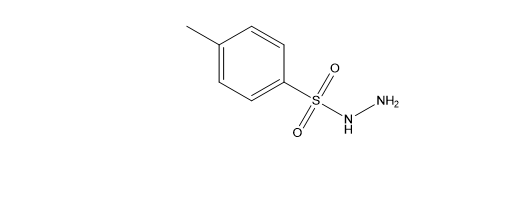
Key Uses:
- Organic Synthesis: A versatile reagent for forming hydrazones from ketones/aldehydes, leading to diazo compounds and carbenes.
- Polymer Foaming: Functions as a chemical blowing agent (foaming agent) to create cellular structures in plastics.
- Pharmaceuticals: Used in synthesizing active pharmaceutical ingredients (APIs) and intermediates, such as paspaline.
- Heterocyclic Chemistry: Helps in synthesizing N-heterocycles (like dipyrazolopyridines) and selenadiazole derivatives.
- Reaction Medium: Generates reactive diimide for various transformations and is used in modified Wolff-Kishner reductions.
Key Applications:
- Organic Synthesis:A crucial reagent for creating tosylhydrazones from aldehydes and ketones, leading to diazo compounds, carbenes, and N-heterocycles.
- Polymer Foaming:Functions as a blowing agent (foaming agent) in the polymer industry, expanding materials.
- Pharmaceuticals:Serves as an intermediate in drug development and synthesis.
- Specialty Chemicals:Used in preparing selenadiazole derivatives and other complex structures.
-
Polymer and Plastics Industry
The most significant commercial application for this compound is as a chemical blowing agent.
- Foaming Agent: TSH decomposes at elevated temperatures (typically around 100–110°C) to release nitrogen gas. This gas creates a foamed structure in materials such as natural and synthetic rubber, polyolefins (like polyethylene and polypropylene), and PVC.
- Stabilizer and Additive: It is used as a stabilizer for certain polymers and as an additive in coatings, adhesives, and sealants to improve durability and performance.
- Organic Synthesis and Research
In laboratory and industrial chemical synthesis, TSH is a critical reagent due to its nucleophilic and reducing properties.
- Preparation of Tosylhydrazones: It reacts with ketones and aldehydes to form tosylhydrazones, which are essential intermediates for further transformations.
- Reduction Reactions: It acts as a hydrogen donor in reduction processes, such as the modified Wolff-Kishner reduction, which converts carbonyl groups into hydrocarbons.
- Synthesis of Heterocycles: It is used to prepare complex molecules like 1,2,3-selenadiazole derivatives and dipyrazolo[1, 5-a:4′, 3′-c]pyridines.
- Generation of Reactive Intermediates: It helps in the production of diazo compounds and carbenes through the decomposition of its hydrazone derivatives.
- Pharmaceutical and Agrochemical Development
TSH serves as a key building block or intermediate in the synthesis of active ingredients.
- Drug Intermediates: It is used in the synthesis of pharmaceutical compounds, including researchers exploring its potential in antimicrobial and cancer research.
- Specific Syntheses: It has been specifically cited as a reactant in the synthesis of paspaline.
- Miscellaneous Industrial Uses
- Corrosion Inhibitor: It can be used to protect metal surfaces from oxidation and corrosion.
- Analytical Standard: It is utilized as a reference standard in qualitative and quantitative research experiments involving HPLC, GC, and MS.
FAQs
What is Tosylhydrazine (CAS 1576-35-8)?Tosylhydrazine (CAS 1576-35-8) is an organic sulfonyl hydrazine compound used as an intermediate and reagent in organic and pharmaceutical synthesiWhat are the main applications of Tosylhydrazine?Tosylhydrazine is widely used in pharmaceutical intermediates, heterocyclic synthesis, and specialty chemical research applications.Is Tosylhydrazine used in pharmaceutical manufacturing?Yes, Tosylhydrazine is commonly used in pharmaceutical and API research for controlled chemical reactions and intermediate development.Do you manufacture Tosylhydrazine in bulk quantities?Yes, we manufacture and supply Tosylhydrazine (CAS 1576-35-8) in bulk quantities for industrial and research customers.What purity grades are available for Tosylhydrazine?Tosylhydrazine is available in high-purity grades suitable for pharmaceutical, specialty chemical, and laboratory use.
Key Uses:
- Organic Synthesis: A versatile reagent for forming hydrazones from ketones/aldehydes, leading to diazo compounds and carbenes.
- Polymer Foaming: Functions as a chemical blowing agent (foaming agent) to create cellular structures in plastics.
- Pharmaceuticals: Used in synthesizing active pharmaceutical ingredients (APIs) and intermediates, such as paspaline.
- Heterocyclic Chemistry: Helps in synthesizing N-heterocycles (like dipyrazolopyridines) and selenadiazole derivatives.
- Reaction Medium: Generates reactive diimide for various transformations and is used in modified Wolff-Kishner reductions.
Key Applications:
- Organic Synthesis:A crucial reagent for creating tosylhydrazones from aldehydes and ketones, leading to diazo compounds, carbenes, and N-heterocycles.
- Polymer Foaming:Functions as a blowing agent (foaming agent) in the polymer industry, expanding materials.
- Pharmaceuticals:Serves as an intermediate in drug development and synthesis.
- Specialty Chemicals:Used in preparing selenadiazole derivatives and other complex structures.
-
Polymer and Plastics Industry
The most significant commercial application for this compound is as a chemical blowing agent.
- Foaming Agent: TSH decomposes at elevated temperatures (typically around 100–110°C) to release nitrogen gas. This gas creates a foamed structure in materials such as natural and synthetic rubber, polyolefins (like polyethylene and polypropylene), and PVC.
- Stabilizer and Additive: It is used as a stabilizer for certain polymers and as an additive in coatings, adhesives, and sealants to improve durability and performance.
- Organic Synthesis and Research
In laboratory and industrial chemical synthesis, TSH is a critical reagent due to its nucleophilic and reducing properties.
- Preparation of Tosylhydrazones: It reacts with ketones and aldehydes to form tosylhydrazones, which are essential intermediates for further transformations.
- Reduction Reactions: It acts as a hydrogen donor in reduction processes, such as the modified Wolff-Kishner reduction, which converts carbonyl groups into hydrocarbons.
- Synthesis of Heterocycles: It is used to prepare complex molecules like 1,2,3-selenadiazole derivatives and dipyrazolo[1, 5-a:4′, 3′-c]pyridines.
- Generation of Reactive Intermediates: It helps in the production of diazo compounds and carbenes through the decomposition of its hydrazone derivatives.
- Pharmaceutical and Agrochemical Development
TSH serves as a key building block or intermediate in the synthesis of active ingredients.
- Drug Intermediates: It is used in the synthesis of pharmaceutical compounds, including researchers exploring its potential in antimicrobial and cancer research.
- Specific Syntheses: It has been specifically cited as a reactant in the synthesis of paspaline.
- Miscellaneous Industrial Uses
- Corrosion Inhibitor: It can be used to protect metal surfaces from oxidation and corrosion.
- Analytical Standard: It is utilized as a reference standard in qualitative and quantitative research experiments involving HPLC, GC, and MS.
FAQs