Uses in Chemical Synthesis
Peptide Synthesis: Used as a coupling additive to suppress the racemization of chiral molecules and enhance efficiency.
Amide Synthesis: Facilitates amide bond formation by forming activated esters when paired with carbodiimides like DCC, DIC, or EDC.
Oligonucleotide Synthesis: Used as an additive in nucleotide coupling reactions.
Acylation Catalyst: Used in the synthesis of esters and complex active carboxylic derivatives.
Key Applications
- Pharmaceutical Industry: Essential for the production of pharmaceutical peptides and complex active pharmaceutical ingredients (APIs).
- Biochemical Research: Employed in laboratory-scale peptide synthesis.
- Experimental Industrial Uses: Occasionally investigated for pulp bleaching and special composite material formulation.
Handling and Storage
- Storage: Store in a cool, dry, inert atmosphere (inert gas recommended).
- Safety Note: While HOBt hydrate is commonly used to minimize risks, the anhydrous form requires extreme care due to its explosive nature when dry.
- Handling: Avoid contact with oxidizing agents, strong acids, and ignition sources.
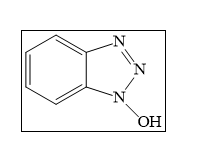
N-Hydroxybenzotriazole Anhydrous (HOBt Anhydrous) is a high-purity, moisture-sensitive coupling reagent primarily used in peptide synthesis to improve efficiency and reduce racemization. It acts as a potent acylation catalyst and condensation agent in carbodiimide-mediated reactions
It is widely used as a coupling reagent in peptide synthesis to improve reaction efficiency. It is the unique identification number assigned to N-Hydroxybenzotriazole Anhydrous. It helps reduce side reactions and enhances the formation of peptide bonds. Anhydrous HOBt contains no water, offering better stability and reactivity in certain applications. It is commonly used in pharmaceutical, biotech, and chemical research industries.