Key Synonyms for CAS 15761-39-4:
- Boc-L-Proline
- Boc-Pro-OH
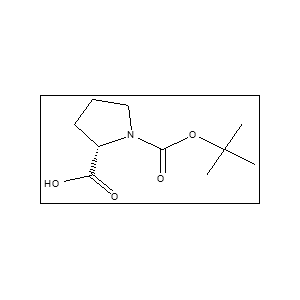
- N-(tert-Butoxycarbonyl)-L-proline
- N-tert-Butyloxycarbonyl-L-proline
- (2S)-1-[(2-methylpropan-2-yl)oxycarbonyl]pyrrolidine-2-carboxylic acid (IUPAC name)
- 1-tert-butoxycarbonyl-L-proline
- S-1-tert-butoxycarbonyl pyrrolidine-2-carboxylic acid
- Boc-l-pro
This compound is commonly used as a synthetic intermediate, including in the production of Hepatitis C drugs like Daclatasvir
N-Boc-L-proline (CAS 15761-39-4) is a widely used protected amino acid, primarily serving as a key building block in peptide synthesis and pharmaceutical drug development. It acts as an N-protected proline derivative to prevent side reactions, enabling the creation of complex molecules like proline-based drugs and protease inhibitors.
Key Applications and Uses:
- Peptide Synthesis: It is essential for protecting the amino group of L-proline during solid-phase and liquid-phase peptide synthesis, reducing side reactions and ensuring selective modification.
- Drug Development: It serves as a vital intermediate in creating pharmaceutical compounds, including those targeted toward neurological disorders and antiviral drugs.
- Pharmaceutical Research: It is used as a tool in investigating metabolic processes and in the synthesis of proline-based inhibitors.
- Protein Engineering: It is used to introduce specific proline residues to stabilize proteins and study their functionality.
- Material Science: It is explored for developing specialized polymers.
Main Characteristics:
- Usage: Stable and easy to handle for chemical synthesis.
It is mainly used in peptide synthesis, drug development, and organic chemical research. The molecular formula is C₁₀H₁₇NO₄. It should be handled with proper safety precautions, including gloves and protective equipment, as it may cause irritation. Store in a cool, dry place in a tightly sealed container, away from moisture and direct sunlight.