
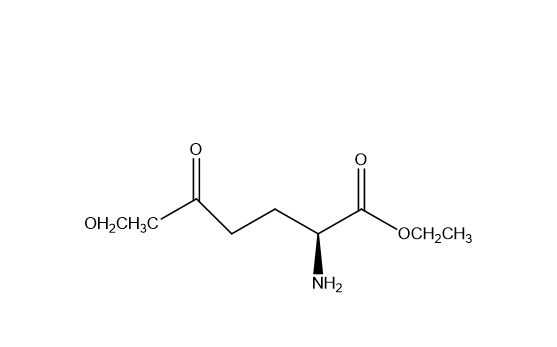
Synonyms:
Diethyl L-glutamate hydrochloride
L-Glutamic acid, 1,5-diethyl ester, hydrochloride (1:1)
H-Glu(OEt)-OEt•HCl
L-Glutamic acid diethyl ester HCl
(S)-Diethyl 2-aminopentanedioate hydrochloride
Diethyl glutamate hydrochloride
1,5-Diethyl (2S)-2-aminopentanedioate hydrochloride
(S)-1,5-Diethoxy-1,5-dioxopentan-2-amine hydrochloride
Uses:
Pharmaceutical Intermediate: Acts as a building block for anticonvulsants and other nervous system treatments.
Chemical Synthesis: Used to produce
and L-glutamic acid-based dendritic compounds.
Biochemical Research: Employed to study neurotransmitter functions and metabolic pathways.
Other Applications: Acts as a moisturizing agent in cosmetics and a potential growth stimulant in fertilizers.
Key Applications:
Peptide Synthesis: It serves as a building block and protected amino acid derivative in solution-phase peptide synthesis.
Polymer and Dendrimer Production: Used in the synthesis of Poly(α-peptide) via polymerization, and for making L-glutamic acid-based dendritic compounds.
Pharmaceutical Intermediate: Acts as a key intermediate in the synthesis of drugs, particularly those targeting the central nervous system.
Biochemical Research: Employed to study neurotransmitter functions and metabolic pathways.
Specialized Reactions: Utilized in the production of Oligo(γ-ethyl L-glutamate) through enzymatically catalyzed (papain) oligomerization.


