Uses and Applications
Boc-Glycine Methyl Ester is primarily used as a protected intermediate in organic synthesis.
Peptide Synthesis: Used as a building block for solid-phase and solution-phase peptide synthesis.
Pharmaceutical Intermediates: Employed in the synthesis of bioactive molecules, including the preparation of Pregabalin, a GABA analogue used as an anticonvulsant.
Chemical Synthesis: Serves as a versatile intermediate in chemical reactions, particularly for introducing protected glycine residues.
Antioxidants: Used in the synthesis of antioxidants.
Bioconjugation: Applied in attaching molecules to surfaces or other biomolecules.
Research: Utilized in neurochemical research related to neurotransmitter functions.
Storage and Handling
The compound should be kept sealed and stored under inert gas in a dark place at 4°C to 8°C to maintain stability. It is typically handled in a dry environment to prevent premature hydrolysis of the ester or deprotection of the BOC group.
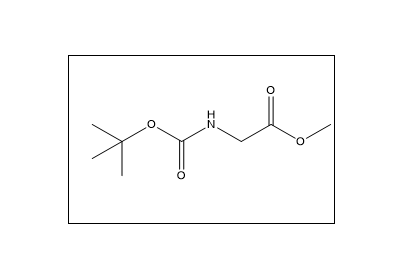
Boc-Glycine Methyl Ester (CAS number 31954-27-5) is an organic compound that serves as a protected form of the amino acid glycine. It features a tert-butoxycarbonyl (Boc) protecting group on the amine and a methyl ester on the carboxyl group, enhancing its stability and solubility in organic solvents, making it a critical building block in pharmaceutical research and peptide synthesis.
It is mainly used as an intermediate in peptide synthesis and pharmaceutical research. It is the unique chemical identification number assigned to N-Boc Glycine Methyl Ester. Yes, it is widely used as a protected amino acid derivative in peptide synthesis. The Boc (tert-butoxycarbonyl) group protects the amine during chemical reactions. It is used in pharmaceuticals, biotechnology, and chemical research industries.