Key Properties:
Molecular Weight: 193.12 g/mol
Form: Liquid
Density: 1.118 g/mL at 25 °C
Boiling Point: 201 °C
Melting Point: -55 °C
Flash Point: 80 °C (176 °F)
Refractive Index: n20/D 1.452
Solubility: Insoluble in water
Vapor Density: 6.7 (vs air)
Vapor Pressure: 0.34 mmHg at 25 °C
Safety and Handling
Hazard Symbols: H400 (Very toxic to aquatic life)
Storage: Store in a cool, dark place, ideally below 15°C.
PPE: Use safety glasses and gloves.
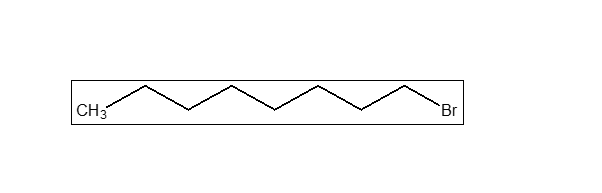
1-Bromooctane (CAS 111-83-1) is a halogenated hydrocarbon commonly used in organic synthesis, with the molecular formula
Its most common synonyms are n-octyl bromide, octyl bromide, 1-octylbromide, and octane, 1-bromo-. It is also referred to as monobromooctane or 1-bromo octane.
Primary Synonyms:
n-Octyl bromide
Octyl bromide
1-Octylbromide
Octane, 1-bromo-
Other Names:
1-Bromo octane
Monobromooctane
Octylbromide
n-Bromooctane
1-Bromoctane
1-Bromooctane-d4 (Deuterated)
Identifiers:
CAS Number: 111-83-1
EC Number: 203-912-9
MDL Number: MFCD00000276
PubChem CID: 8140
UNSPSC Code: 12352100
Molecular Formula: C8H17Br
Uses:
1-Bromooctane (CAS 111-83-1) is a versatile alkylating agent used primarily as an intermediate in organic synthesis, the production of fluorous polymers, and quaternary ammonium compounds. It serves as an extraction solvent for analyzing volatile organic compounds in water and acts as a building block for organic semiconductors.
Key applications:
Chemical Synthesis: Used as a raw material for synthesizing various chemicals, including pharmaceutical intermediates and surfactants.
Polymer Industry: Utilized in the preparation of specialized polymers, such as surface modifiers and emulsifiers.
Analytical Chemistry: Employed as an extraction solvent for detecting volatile organic compounds in water.
Material Science: Acts as a building block for organic semiconductors and quaternary ammonium chloride-modified poly (propylenimine) dendrimers.
Laboratory Reagent: Used in research and development