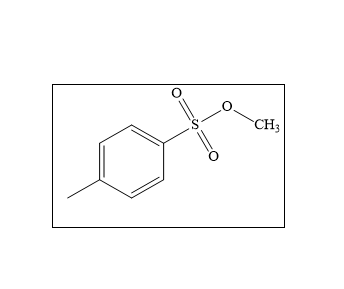
Methyl p-Toluenesulfonate CASNO:80-48-8
Physical properties:
Methyl p-Toluenesulfonate (CAS 80-48-8) is a strong methylating agent in organic synthesis. It is moisture-sensitive, soluble in organic solvents, and has a molecular weight of 186.23g/mol. It is hazardous, causing skin burns and potential genetic defects.
Key Properties and Specifications:
Appearance: White crystalline solid or light yellow liquid
Melting Point: 25−28∘C (lit.)
Boiling Point: 144−145∘C at 5mmHg
Density: 1.234g/mL at 25∘C
Refractive Index: 𝑛20/𝐷1.5172
Solubility: Soluble in alcohol, ether, and benzene; insoluble in water
Stability: Moisture sensitive; store at 2−8∘C
Hazard Identification: Danger: Causes severe skin burns and eye damage (H314), harmful if swallowed (H302), and may cause an allergic skin reaction (H317)
Common Applications:
- Methylating Agent: Used in the synthesis of pharmaceuticals, agrochemicals, and specialty chemicals.
- Analytical Chemistry: Used as an oxidation catalyst in chromatography (GC-MS, LC-MS).
- Polymer Industry: Used as a coupling agent for cationic polymers.
Key Synonyms and Identifiers
- 𝑝-Toluenesulfonic acid methyl ester
- Methyl 𝑝-tosylate
- Methyl 4-methylbenzenesulfonate
- Methyl toluene-4-sulfonate
- Methanol, p-toluenesulfonate
- Methyl-4-toluenesulfonate
- 4-Methylbenzenesulfonic acid methyl ester
Methyl p-toluenesulfonate (CAS 80-48-8) is a powerful methylating agent and organic intermediate, primarily used in chemical synthesis, pharmaceuticals, and dye manufacturing. It acts as a catalyst for alkyd resins and a reagent for modifying molecular structures. It is a low-melting solid/liquid, commonly used to transfer methyl groups.
Key Uses and Applications
- Organic Synthesis & Methylation: Used as a strong methylating agent to introduce methyl groups into various organic compounds.
- Pharmaceutical Industry: Employed in the synthesis of active pharmaceutical ingredients (APIs) and the selective 1-substitution of tetrazoles.
- Chemical Manufacturing & Catalysis: Acts as a catalyst in the production of alkyd resins and in the preparation of dyes, enhancing stability and color.
- Research & Analytical Chemistry: Used in chemical research as a reagent and in analytical chemistry as a derivatizing agent in chromatography.
- Specialty Polymers: Acts as a coupling agent to improve the durability and resistance of polymers.
Key Information
- Molecular Formula: 𝐶8𝐻10𝑂3𝑆
- Safety Hazards: Corrosive, causes skin/eye burns, and is suspected of causing genetic defects.