Uses
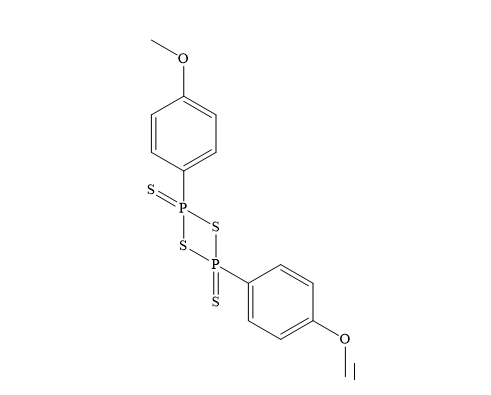
A powerful thiation agent for converting carbonyls to thiocarbonyls in organic synthesis.
- Thionation: Converts carbonyls (C=O) to thiocarbonyls (C=S) in various compounds like ketones, esters, amides, lactones, and quinones.
- Synthesis of Thioesters & Thioamides: Key for creating these valuable intermediates for further organic synthesis, notes CymitQuimica and Chem-Impex.
- Preparation of Thiophenes: Used to create thiophene derivatives, vital for organic electronics and materials science.
- Functionalization: Introduces sulfur into aromatic systems and can convert alcohols to thiols.
- Catalysis: Can act as a Lewis acid catalyst in reactions like the Diels-Alder reactionBiochemical Applications: Aids in protein modification (e.g., with Trypsin) and explores antifungal/anti-inflammatory properties in research, according to Chemical Bull Pvt. Ltd. and Biosynth.
Industries & Fields
- Pharmaceuticals: Drug synthesis and development.
- Materials Science: Creating new materials with specific electronic properties.
- Agrochemicals: Developing new pesticides and dyes.
- Academic Research: Exploring organosulfur chemistry.
Key Applications:
- Thionation Reactions: Converts ketones/aldehydes to thioketones/thioaldehydes, esters to thioesters, amides to thioamides, and oximes to thiones.
- Sulfur-Containing Compound Synthesis: Crucial for making heterocycles like thiophenes, thietanes, and other sulfur-rich molecules.
- Medicinal Chemistry: Used to introduce sulfur for creating novel drug candidates.
- Biochemical Modifications: Aids in protein modification and enzymatic processes.
- Catalysis: Acts as a Lewis acid catalyst for Diels-Alder reactions and facilitates C-S bond formation.
Industries & Fields:
- Chemical Industry
- Organic Synthesis Labs
- Biochemical Research
- Materials Science
FAQs The molecular formula of Lawesson’s Reagent (19172-47-5) is C₁₄H₁₄O₂P₂S₄.