Acetyl Hydrazine (CAS 1068-57-1)

Uses & Applications:

Acethydrazide (CAS 1068-57-1), also known as acetic acid hydrazide or acetylhydrazine, is a crucial intermediate in organic synthesis, particularly in the pharmaceutical and agrochemical industries. It serves as a building block for various drugs, including analgesics and anticancer agents, and is used in the synthesis of herbicides. This document provides detailed experimental procedures for the laboratory-scale synthesis of this compound, focusing on the two most common methods: the reaction of ethyl acetate with hydrazine hydrate and the direct reaction of acetic acid with hydrazine hydrate. Safety precautions, reactant quantities, reaction conditions, and purification methods are outlined to ensure a safe and efficient synthesis.

Antibiotic Intermediate: It is used in the synthesis of Nifuratrone, an antimicrobial agent, and is also explored for its own potential antimicrobial and antitumor properties.

Tuberculosis Treatment: Acetohydrazide is used as an antibiotic for Mycobacterium tuberculosis and acts as a key metabolite of the anti-TB drug Isoniazid.

Sunitinib Preparation: It is involved in the preparation of Sunitinib, a kinase inhibitor used for treating certain cancers, by reacting with 5-fluoroisatin

  1. Chemical Research and Synthesis

Organic Building Block: It serves as a general intermediate in organic synthesis for creating various nitrogen-containing compounds.

Ligand Synthesis: Used in the synthesis of (E)-N′-(2-hydroxybenzylidene)acetohydrazide, which is an ONO pincer ligand used in coordination chemistry.

Metabolic Studies: It is a critical subject in toxicological research, specifically regarding isoniazid-induced hepatotoxicity (liver damage), where it is studied as a metabolite that can lead to the formation of free radicals.

  1. Biological Applications

Enzyme Inhibition: It has been found to inhibit mycolic acid biosynthesis, which is essential for the cell wall structure of TB-causing bacteria.

Hydrazine Derivative Preparation: Acts as a precursor for various hydrazine derivatives used in medicinal chemistry.

For more detailed technical data, you can refer to the PubChem entry for Acetohydrazide or safety and product sheets from suppliers like Sigma-Aldrich and TCI Chemicals.

Category: Tags: ,

Properties:

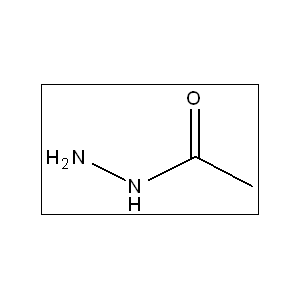
IUPAC Name acetohydrazide
SMILES CC(=O)NN
Molecular Formula C2H6N2O
Molecular Weight 74.08 g/mol
CAS No. 1068-57-1
Appearance White to almost white solid or powder
Water by KF NMT 1.0%
Purity by GC NLT 80.0%
Category Fine chemicals and intermediate
Synonyms

Acethydrazide

Acetylhydrazine

Acetic acid hydrazide

Acetic hydrazide

Acetohydrazide

Monoacetylhydrazine

Hydrazine, acetyl-

Ethanehydrazonic acid

Storage

Store at Room Temperature

FAQs

What is Acetyl Hydrazine (CAS No. 1068-57-1)?
Acetyl Hydrazine – 1068-57-1 is an organic chemical compound commonly used as an intermediate in chemical research and industrial synthesis.
What is the CAS number of Acetyl Hydrazine?

The official CAS number for Acetyl Hydrazine is 1068-57-1, which is used for accurate identification in chemical databases and regulatory documentation.

What are the uses of Acetyl Hydrazine – 1068-57-1?
Acetyl Hydrazine – 1068-57-1 is primarily used in organic synthesis, pharmaceutical research, and specialty chemical manufacturing.
Is Acetyl Hydrazine hazardous?
Yes, Acetyl Hydrazine – 1068-57-1 should be handled with care. It may pose health and safety risks if not managed according to standard laboratory and industrial safety protocols.
What is the chemical formula of Acetyl Hydrazine (1068-57-1)?

The chemical formula of Acetyl Hydrazine – 1068-57-1 is C₂H₆N₂O, indicating the presence of carbon, hydrogen, nitrogen, and oxygen.

FAQs

What is Acetyl Hydrazine (CAS No. 1068-57-1)?
Acetyl Hydrazine – 1068-57-1 is an organic chemical compound commonly used as an intermediate in chemical research and industrial synthesis.
What is the CAS number of Acetyl Hydrazine?

The official CAS number for Acetyl Hydrazine is 1068-57-1, which is used for accurate identification in chemical databases and regulatory documentation.

What are the uses of Acetyl Hydrazine – 1068-57-1?
Acetyl Hydrazine – 1068-57-1 is primarily used in organic synthesis, pharmaceutical research, and specialty chemical manufacturing.
Is Acetyl Hydrazine hazardous?
Yes, Acetyl Hydrazine – 1068-57-1 should be handled with care. It may pose health and safety risks if not managed according to standard laboratory and industrial safety protocols.
What is the chemical formula of Acetyl Hydrazine (1068-57-1)?

The chemical formula of Acetyl Hydrazine – 1068-57-1 is C₂H₆N₂O, indicating the presence of carbon, hydrogen, nitrogen, and oxygen.