Physical properties:
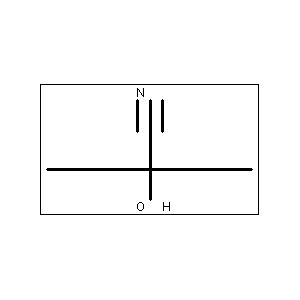
Molecular Formula: C4H7NO
Molecular Weight: 85.11
Appearance: Colorless liquid
Density: 0.932 g/mL at 25°C
Boiling Point: 82°C at 23 mmHg
Melting Point: -19°C to -21°C
Refractive Index: n20/D 1.399
Solubility: Soluble in water, alcohols, and ether
Vapor Pressure: 0.3 psi at 20°C
Flash Point: 165°F (74°C)
Stability: Decomposes upon heating, or in contact with water, acids, or alkali, releasing hydrogen cyanide.
Synonyms:
α-Hydroxyisobutyronitrile (or Alpha-hydroxyisobutyronitrile)
2-Hydroxy-2-methylpropanenitrile
2-Methyllactonitrile
Acetone cyanhydrin (alternative spelling)
2-Cyano-2-propanol
Fisher Scientific +2
2-Hydroxyisobutyronitrile
Acetoncyanhydrin
Acetoncianidrina
2-Hydroxy-2-methylpropionitrile
Cyanohydrin-2-propanone
Uses:
Acetone cyanohydrin (CAS 75-86-5) is primarily used as an intermediate in the production of methyl methacrylate (MMA) for acrylic plastics, and as a source of hydrogen cyanide in chemical synthesis. It also serves as a raw material for insecticides and in specialized organic reactions like the Strecker reaction.
Key Applications:
Cyanation reactions of aryl halides,aldehydes and alcohols.
Stereospecific epoxide ring opening.
Strecker reaction of α-amido sulfones to synthesize α-amino nitriles