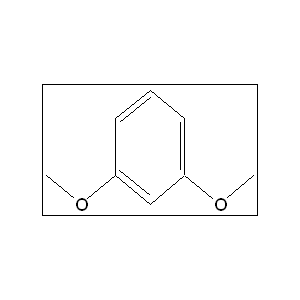
1,3-Dimethoxy Benzene – 151-10-0

Introduction

This compound is a valuable organic intermediate in the synthesis of a wide range of compounds, including pharmaceuticals, agrochemicals, and fragrances. Its synthesis from the readily available starting material, resorcinol, is a common transformation in organic chemistry. The most prevalent method for this conversion is the methylation of the hydroxyl groups of resorcinol. This is typically achieved through a Williamson ether synthesis, which involves the reaction of an alkoxide with a primary alkyl halide or another electrophile with a good leaving group. In the case of this compound synthesis, resorcinol is first deprotonated by a base to form the resorcinolate dianion, which then acts as a nucleophile, attacking the methylating agent.

Reaction Mechanism

The synthesis of this compound from resorcinol proceeds via a Williamson ether synthesis, which is a classic SN2 reaction. The overall process can be broken down into two main steps:

  • Deprotonation: In the first step, a base, typically a hydroxide such as sodium hydroxide, deprotonates the two acidic phenolic hydroxyl groups of resorcinol. This results in the formation of the resorcinolate dianion, a potent nucleophile.
  • Nucleophilic Attack: The resorcinolate dianion then undergoes a nucleophilic attack on the methylating agent, such as dimethyl sulfate. The lone pair of electrons on each oxygen atom attacks the electrophilic methyl group of the dimethyl sulfate, leading to the displacement of the sulfate leaving group in a concerted SN2 fashion. This occurs sequentially for both hydroxyl groups to yield the final product, this compound.

It is important to note that C-alkylation can be a competing side reaction, where the nucleophilic attack occurs at the carbon atoms of the benzene ring rather than the oxygen atoms. However, by carefully selecting the reaction conditions, such as using a weak aqueous alkali, O-alkylation is favored.


IUPAC Name                                : 1,3-dimethoxybenzene

Molecular Formula                         : C8H10O2

Molecular Weight                           : 138.16 g/mol

Physical Description                       : Colorless to Pale Yellow Colored Liquid

Boiling Point                                    : 85.00 to 87.00 °C. @ 7.00 mm Hg

Solubility                                        : Miscible With Dichloromethane

Density                                           : 1.053-1.057

Vapor Pressure                               : 0.52 [mmHg]

CAS No.                                         : 151-10-0

Melting point                                  : -52°C

Purity by GC                                 : NLT 96%

Category                                        : Pharmaceutical intermediate, building blocks

Linear formula                               : C6H4 (OCH3)2

Synonym(s)                                   : Resorcinol dimethyl ether

Dimethylresorcinol

m-Dimethoxybenzene (meta-Dimethoxybenzene)

3-Methoxyanisole (m-Methoxyanisole)

Benzene, 1,3-dimethoxy- (Chemical Abstracts indexing name)

Benzene, m-dimethoxy-

3-Methoxyphenyl methyl ether

FAQs

What is 1,3-Dimethoxy Benzene?
1,3-Dimethoxy Benzene is an aromatic organic compound commonly used as a chemical intermediate in pharmaceutical, agrochemical, and fine chemical synthesis.
What is the CAS number of 1,3-Dimethoxy Benzene?
The CAS number of 1,3-Dimethoxy Benzene is 151-10-0, which uniquely identifies this compound in chemical databases and regulatory documents
What is the molecular weight of 1,3-Dimethoxy Benzene?

The molecular weight of 1,3-Dimethoxy Benzene (151-10-0) is approximately 138.16 g/mol.
Is 1,3-Dimethoxy Benzene soluble in water?
1,3-Dimethoxy Benzene (CAS 151-10-0) is sparingly soluble in water but readily soluble in most organic solvents such as ethanol, ether, benzene, and chloroform.
How is 1,3-Dimethoxy Benzene transported?
1,3-Dimethoxy Benzene is transported in sealed, properly labeled containers in accordance with chemical transportation and safety regulations.